
Reproductive Health
1. Contraceptive Methods & Classification
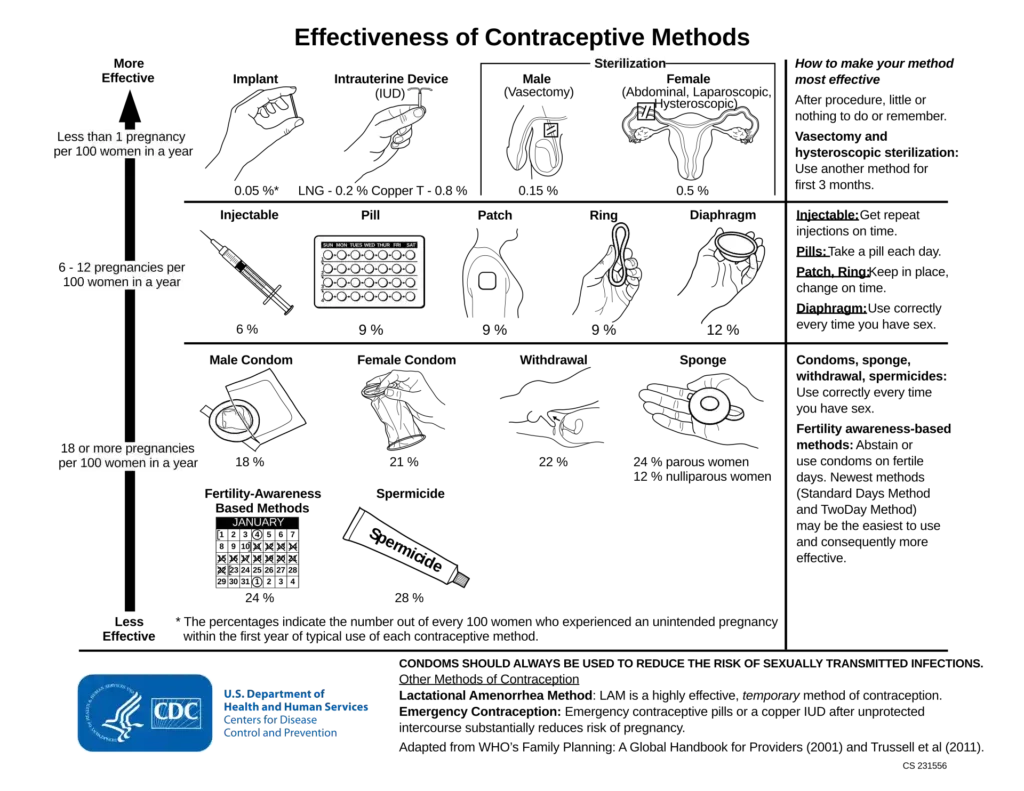
Contraceptive Method: Methods that prevent conception/unwanted pregnancy without affecting normal sexual intercourse.
A. Natural / Traditional Methods
Mechanism of Action (MOA): Works on the principle of avoiding the meeting of ovum and sperm. Zero side effects, but high rate of failure.
- 1. Rhythm / Calendar Method: Periodic abstinence from coitus during the fertile period (Days 10 to 17 of a 28-day menstrual cycle). Ovulation detected via Ovulation Kit, Basal Body Temperature (BBT increases due to thermogenic effect of Progesterone), or Billing’s Cervical Mucus Method (mucus becomes thin and slippery).
- 2. Coitus Interruptus / Withdrawal: Male withdraws penis from vagina just prior to ejaculation. Limitations: Requires high self-control; pre-ejaculatory fluid may contain sperms.
- 3. Lactational Amenorrhea: Absence of menstruation during intense breastfeeding due to high Prolactin levels inhibiting FSH/LH via negative feedback. Effective only up to a maximum of 6 months post-partum.
B. Barrier Methods
Physical barriers that prevent ovum and sperm from physically meeting.
- Male Condoms (e.g., Nirodh): Latex sheath worn over copulatory organ; also protects against STDs. Most popular brand in India.
- Female Barriers: Female Condoms (Femidom), Diaphragms, Cervical Caps, and Vaults (made of rubber; reusable). Efficiency is enhanced when used along with spermicidal jellies/creams.
C. Intrauterine Devices (IUDs)
Devices inserted into the uterus through the vagina by medical experts. Most widely accepted contraceptive method in India.
- 1. Non-Medicated / Inert IUDs: Increase phagocytosis of sperms; prevents implantation (e.g., Lippes Loop).
- 2. Copper-Releasing IUDs: Released $\text{Cu}^{2+}$ ions suppress sperm motility and fertilizing capacity (e.g., CuT, Cu7, Multiload 375).
- 3. Hormone-Releasing IUDs: Make uterus unsuitable for implantation and cervix hostile to sperms via progesterone release (e.g., Progestasert, LNG-20).
D. Oral Contraceptive Pills
- Combined Pills (e.g., Mala-D, Mala-N): Progestogen-Estrogen combination taken daily for 21 days starting within first 5 days of cycle, followed by a 7-day gap (iron pills). Inhibits ovulation and alters cervical mucus.
- Mini Pills: Progestogen-only pills (POP).
- Saheli: Developed by CDRI Lucknow. Non-steroidal, once-a-week pill with high contraceptive value and minimal side effects (contains Centchroman).
2. Advanced Contraception, MTP & STDs
A. Injectables, Implants & Emergency Contraception
- Injectables: Progestogen analogue injections (e.g., Depo-Provera given every 3 months).
- Implants: Subcutaneous hormone capsules under skin (e.g., Norplant – 6 capsules for 5 years; Implanon – 1 capsule for 3 years).
- Surgical Methods (Sterilization): Terminal/permanent method with poor reversibility.• Vasectomy: Surgical cutting and tying of Vas Deferens through scrotum in males. Ejaculated semen lacks sperms; spermatogenesis continues.
• Tubectomy: Surgical cutting and tying of Fallopian tubes in females.
- Emergency / Post-Coital Contraception: Administered within 72 hours of unprotected coitus to avoid pregnancy due to rape or casual intercourse (e.g., I-Pill, Progestins, RU-486 / Mifepristone – Anti-progesterone, or IUD insertion).
B. Medical Termination of Pregnancy (MTP)
Intentional or voluntary termination of pregnancy before full term (induced abortion). ~40–50 million MTPs performed annually worldwide (1/5th of total pregnancies).
- Legalization: Legalized in India in 1971 with strict conditions to avoid female foeticide. MTP Amendment Act (2017) allows termination up to 12 weeks on 1 doctor’s opinion, and up to 24 weeks on 2 doctors’ recommendation.
- Safety Window: Safest during 1st trimester (up to 12 weeks/3 months). 2nd-trimester abortions are significantly riskier.
C. Sexually Transmitted Diseases (STDs / STIs)
| STD Category | Disease Name | Causative Agent |
|---|---|---|
| Bacterial | Syphilis Gonorrhea Chlamydiasis | Treponema pallidum Neisseria gonorrhoeae Chlamydia trachomatis |
| Viral | HIV-AIDS Genital Herpes Genital Warts Hepatitis B | Human Immunodeficiency Virus Herpes Simplex Virus Human Papilloma Virus (HPV) Hepatitis B Virus (HBV) |
| Protozoan | Trichomoniasis | Trichomonas vaginalis |
3. Infertility, ART Techniques & Health Programmes
A. Causes of Infertility
Inability to conceive children after 2 years of unprotected sexual coitus.
- Male Factors: Oligospermia (low sperm count), Asthenospermia (low motility), Azoospermia (absence of sperms), Cryptorchidism, Hyperthermia of scrotum, Klinefelter syndrome, Alcoholism/Smoking.
- Female Factors: Anovulation, Oligo-ovulation, Blocked Fallopian tubes, PCOS (Polycystic Ovarian Syndrome), Uterine fibroids, Turner’s syndrome.
B. Assisted Reproductive Technology (ART)
- 1. IVF (In Vitro Fertilization – Test Tube Baby): Fertilization occurs outside the body in simulated laboratory conditions.• ZIFT (Zygote Intra-Fallopian Transfer): Zygote/early embryo up to 8 blastomeres transferred into Fallopian tube.
• IUT (Intra-Uterine Transfer): Embryo with more than 8 blastomeres (8–32 cells) transferred directly into Uterus.
- 2. GIFT (Gamete Intra-Fallopian Transfer): Transfer of collected ovum from donor into Fallopian tube of another female who cannot produce ova but provides suitable environment for fertilization. In Vivo Fertilization.
- 3. ICSI (Intra-Cytoplasmic Sperm Injection): Specialized laboratory procedure where a single sperm is directly injected into the cytoplasm of an ovum. Used in severe male factor infertility/low sperm count.
- 4. Artificial Insemination (AI) / IUI: Semen collected from husband/donor is artificially introduced into Vagina or Uterus (IUI – Intra-Uterine Insemination). Used in low sperm count/erectile dysfunction.
- 5. Surrogacy: Surrogacy / Rent-a-womb arrangement where embryo formed via IVF is implanted into another female’s womb.
C. National Programmes & Amniocentesis
- Family Planning Programme: India was among the first countries in the world to initiate national family planning in 1951. Currently operating as RCH (Reproductive and Child Health Care) Programme.
- Amniocentesis: Prenatal diagnostic technique based on karyotyping of fetal cells taken from amniotic fluid to detect genetic disorders (e.g., Down syndrome, Sickle-cell anemia).• Statutory Ban: Statutory ban on amniocentesis for sex determination in India to check female foeticide.